How Data Platform Services Support AI and Machine Learning

Artificial Intelligence and machine learning continue to transform how organisations operate, compete, and innovate. From predicting customer behaviour to automating decision-making and identifying operational risks, AI is rapidly becoming a business necessity. However, behind every successful AI initiative lies a critical foundation that often receives far less attention: data.

Without the right infrastructure to store, manage, govern, and process data, even the most advanced AI models fail to deliver meaningful results. This is where data platform services become essential. Strong data platform services provide the structure, scalability, and reliability required to support enterprise AI and machine learning initiatives effectively.

Why Data Infrastructure Determines AI Success

Most AI and machine learning projects do not fail because of weak algorithms. They fail because the underlying data is fragmented, inconsistent, outdated, or inaccessible.

AI systems depend entirely on the quality and availability of the data they learn from. If the data foundation is weak, the outputs generated by AI models will also be unreliable.

Here are some of the most common data challenges organisations face before implementing AI:

Data Silos Across Departments

In many organisations, data is spread across disconnected systems owned by different departments. Sales, finance, operations, customer service, and marketing often store information separately, preventing AI models from accessing a complete picture.

Without unified access to enterprise data, machine learning models cannot generate accurate insights.

Poor Data Quality

Duplicate records, incomplete information, inconsistent formatting, and outdated datasets directly affect AI performance. Low-quality data produces inaccurate predictions, unreliable analytics, and flawed automation outcomes.

Lack of Data Governance

Without clearly defined ownership, policies, and access controls, organisations struggle to manage sensitive data securely and compliantly. This becomes especially important in industries such as healthcare, financial services, and retail.

Scalability Limitations

AI and machine learning workloads require significant computing power and scalable infrastructure. Legacy systems often cannot support the speed, storage, or processing demands required for modern AI applications.

These issues highlight why investing in data platform services is not optional. It is the foundation for building AI systems that are scalable, reliable, and capable of delivering measurable business outcomes.

How Data Platform Services Enable AI and Machine Learning

Modern data platform services help organisations transform raw, disconnected data into a structured, governed, and AI-ready environment.
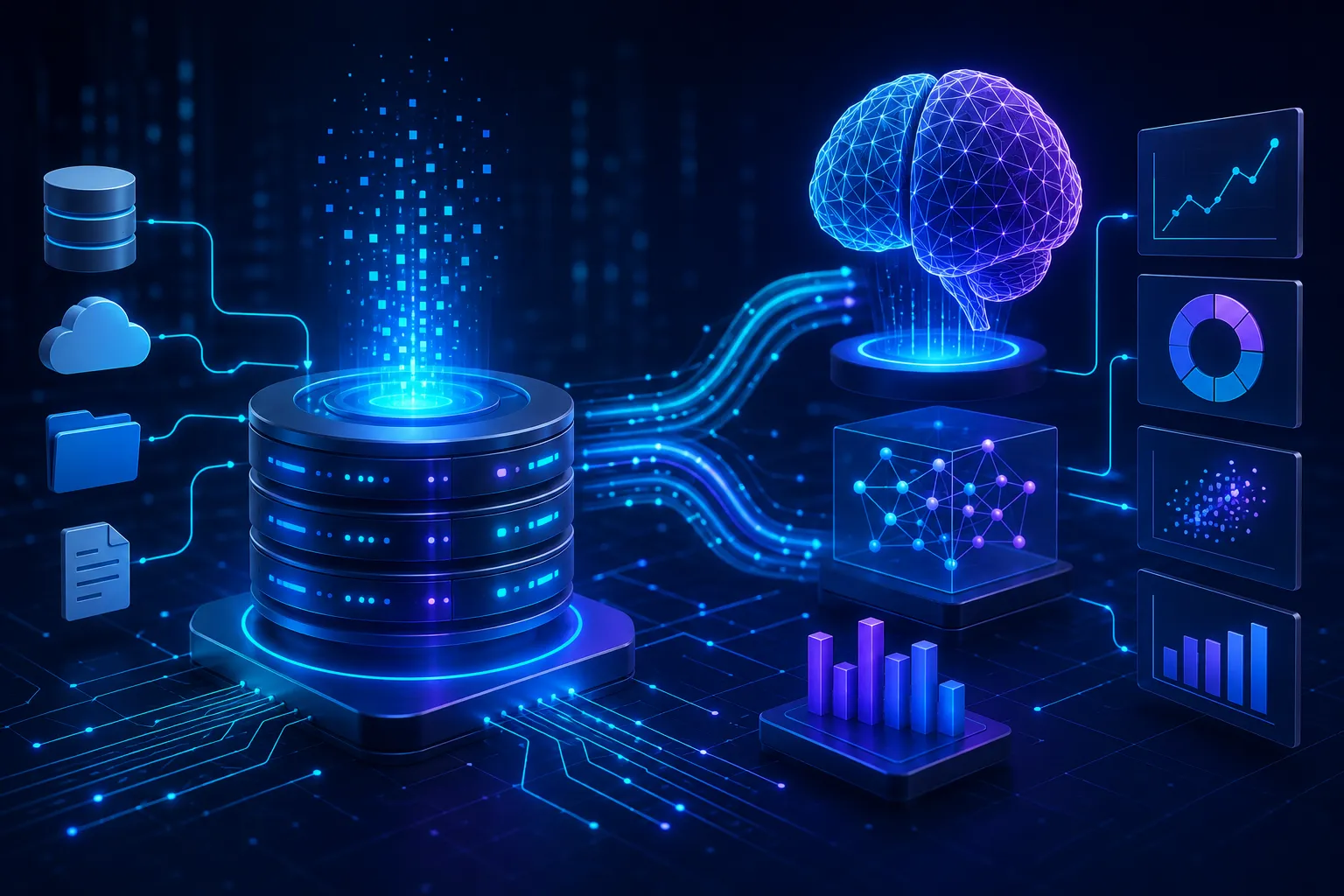
How Data Platform Services Support AI and Machine Learning

Rather than allowing data to accumulate without oversight, data platform services establish the architecture and processes needed to support advanced analytics and machine learning at scale.

Data Migration and Modernisation

Legacy infrastructure was never designed for today’s AI demands. Modern data platform services help organisations migrate data to cloud-based platforms that support high-performance analytics, large-scale storage, and machine learning workloads.

Data Governance and Compliance

Strong governance is a core component of effective data platform services. Clear policies around data ownership, access management, classification, and quality control improve trust in data while supporting regulatory compliance.

DataOps and Automated Pipelines

AI models rely on current, accurate data. Data platform services support this through DataOps practices that automate data pipelines and streamline data movement across systems. This ensures machine learning models are trained on up-to-date information instead of outdated or incomplete datasets.

Business Intelligence and Analytics

Before organisations can build successful AI models, they first need visibility into their existing data. Business intelligence and analytics tools are a critical part of modern data platform services because they help organisations identify trends, patterns, and opportunities.

Microsoft Fabric and Unified Data Platforms

Modern data platform services increasingly rely on unified solutions like Microsoft Fabric, which combines data engineering, real-time analytics, data science, and business intelligence into a single platform.

Unified data environments reduce complexity by enabling teams to work within one integrated ecosystem instead of managing disconnected tools.

Why Data Quality Directly Impacts AI Performance

AI models learn from the data they are given. When that data is incomplete, inconsistent, or inaccurate, the model’s outputs will reflect those weaknesses.

High-quality data leads to:

  1. More accurate predictions
  2. Better automation outcomes
  3. Improved operational insights
  4. Reduced bias and inconsistencies
  5. Greater confidence in AI-generated decisions

Organisations that prioritise data platform services early in their AI journey often experience faster deployment timelines, smoother implementation, and more reliable results.

By contrast, organisations that neglect data preparation frequently spend more time troubleshooting models than generating business value.

How SNP Technologies Delivers Enterprise Data Platform Services

At SNP Technologies, our data platform services are designed to help organisations build modern, AI-ready data foundations that support long-term innovation and scalability.

Our expertise includes:

Microsoft Preferred Data and AI Partner

SNP Technologies is recognised by Microsoft as a preferred Data and AI partner, reflecting our deep experience in enterprise data transformation and AI initiatives.

Microsoft Advanced Specialisations

We hold Microsoft Advanced Specialisations in:

  • AI and Machine Learning
  • Analytics
  • Data Warehouse Migration

These certifications validate our proven expertise in delivering enterprise-grade data and AI solutions.

End-to-End Data Platform Services

Our comprehensive data platform services include:

  • Data migration and modernisation
  • Data governance
  • DataOps implementation
  • Power BI analytics
  • Microsoft Fabric solutions
  • Cloud-based data architecture

Each service is designed to improve data reliability, accessibility, scalability, and AI readiness.

Proven Enterprise Experience

Our team brings extensive industry expertise, including:

  • 150+ Microsoft certifications
  • 14 Microsoft specialisations
  • 1,000+ successful projects delivered across industries
  • Build an AI-Ready Data Foundation with SNP Technologies

AI is only as powerful as the data behind it. Organisations that invest in strong data platform services gain the ability to scale AI confidently, improve operational intelligence, and unlock measurable business value.

At SNP Technologies, we help organisations modernise their data infrastructure, strengthen governance, and create scalable foundations for AI and machine learning success.

If your organisation is preparing for AI adoption, the first step is building the right data platform foundation.

How Managed Extended Detection and Response (MXDR) Reduces Security Alert Fatigue for IT Teams

Security alert fatigue is one of the most underestimated threats facing modern IT operations. Unlike a cyberattack or data breach, it does not arrive suddenly or dramatically. Instead, it builds gradually — through an overwhelming volume of alerts, fragmented tools, limited context, and overstretched security teams. Over time, even highly skilled analysts become desensitised to notifications, increasing the risk that critical threats go unnoticed.

This is exactly where Managed Extended Detection and Response (MXDR) delivers value. By combining advanced threat detection, intelligent correlation, automation, and 24/7 monitoring, Managed Extended Detection and Response helps organisations reduce alert fatigue while strengthening their overall cybersecurity posture.

The Growing Challenge of Security Alert Fatigue

Today’s IT and security teams operate in increasingly complex environments. Endpoints, cloud platforms, identities, applications, and networks all generate their own streams of security alerts. For many organisations, the volume is unmanageable.

Mid-sized enterprises can receive thousands of alerts every single day. The issue is not only the number of alerts, but also the lack of clarity around which ones genuinely matter.

Several factors contribute to alert fatigue:

Fragmented Security Tools

Most organisations rely on multiple security solutions, including endpoint protection, cloud security platforms, identity monitoring tools, and network defences. Each system operates independently, generating alerts without full visibility into the broader security landscape.

Duplicate Notifications

A single incident can trigger multiple alerts across different tools. Security analysts often spend valuable time investigating the same event repeatedly without realising the alerts are connected.

Poor Signal-to-Noise Ratio

A significant percentage of alerts are false positives or low-priority events. Reviewing these consumes time and resources while providing little security value.

Lack of Prioritisation

When every alert appears equally urgent, teams struggle to determine where to focus first. As a result, legitimate threats can become buried beneath routine notifications.

Over time, this constant overload reduces operational efficiency, slows investigations, and increases the likelihood of human error. Analysts begin moving through alerts more quickly, investigations become less thorough, and critical warning signs may be missed entirely.

How Managed Extended Detection and Response Solves the Problem

How MXDR Reduces Security Alert Fatigue for IT Teams

Managed Extended Detection and Response (MXDR) takes a fundamentally different approach to security operations. Instead of treating security tools as isolated systems, MXDR centralises and correlates security signals across the entire IT environment.

This includes data from:

  • Endpoints
  • Cloud workloads
  • Identity and access systems
  • Applications
  • Networks
  • Email environments

By analysing these signals together, Managed Extended Detection and Response provides a more complete and contextual understanding of threats.

The key capabilities that make this work:

Cross-Layer Threat Correlation

One of the most valuable capabilities of Managed Extended Detection and Response is cross-layer correlation. Rather than generating separate alerts for related events, MXDR identifies when multiple signals point to the same underlying incident.

This means:

  • One consolidated incident replaces multiple duplicate alerts
  • Analysts gain full context immediately
  • Investigations become faster and more accurate

Instead of reviewing five disconnected notifications, security teams can focus on one prioritised, actionable incident.

Automated Response Playbooks

Many security incidents follow predictable patterns. Managed Extended Detection and Response uses automated playbooks and Security Orchestration, Automation, and Response (SOAR) capabilities to respond immediately when these threats are detected.

Automated actions may include:

  • Restricting user access
  • Isolating compromised devices
  • Flagging suspicious accounts
  • Blocking malicious activity
  • Initiating containment procedures

This automation dramatically reduces manual workloads while accelerating response times.

Intelligent Alert Tuning

A core advantage of Managed Extended Detection and Response is continuous alert optimisation. Over time, security rules and detection policies are refined to minimise false positives and improve relevance.

This creates:

  • Higher-quality alerts
  • Better prioritisation
  • Reduced noise
  • Improved analyst efficiency

Rather than overwhelming teams with unnecessary notifications, MXDR ensures analysts focus only on the alerts that truly require attention.

Proactive Threat Hunting

Traditional security monitoring is largely reactive. Managed Extended Detection and Response introduces proactive threat hunting capabilities that actively search for suspicious behaviours before they trigger alerts.

Threat hunting helps organisations identify:

  • Hidden threats
  • Advanced persistent attacks
  • Misconfigurations
  • Suspicious lateral movement
  • Indicators of compromise

This proactive layer strengthens security visibility and reduces the likelihood of threats remaining undetected.

The result is a smaller, higher-quality set of findings that analysts can actually work through — rather than a wall of notifications that all look equally pressing.

24/7 Monitoring Without Overloading Internal Teams

Maintaining round-the-clock security monitoring internally is difficult for most organisations. Cyber threats do not operate on business hours, and expecting internal teams to sustain continuous vigilance often leads to burnout.

Managed Extended Detection and Response solves this challenge through a dedicated Security Operations Centre (SOC) that provides 24/7 monitoring, investigation, and response.

This means:

  • Overnight incidents are addressed immediately
  • Weekend threats are monitored continuously
  • Internal teams avoid constant operational pressure
  • Analysts start each day with a clear understanding of what occurred

Instead of returning to hundreds of unreviewed alerts, internal teams receive prioritised insights, documented investigations, and clear next steps.

How SNP Technologies Delivers Managed Extended Detection and Response

At SNP Technologies, our Managed Extended Detection and Response (MXDR) service is powered by Microsoft Sentinel and the full Microsoft Defender Suite.

Our MXDR services include:

24/7 Security Operations Centre

Our security analysts continuously monitor, investigate, and respond to security events in real time.

Predictive Analytics and Threat Intelligence

We leverage continuous intelligence gathering and predictive analytics to identify emerging threats before they escalate.

Automated Playbooks and SOAR Configuration

Our automation frameworks reduce response times by executing predefined actions immediately when threats are detected.

Managed SIEM and Policy Tuning

We continuously refine detection rules, alert thresholds, and security policies to improve alert accuracy and reduce unnecessary noise.

Microsoft-Verified MXDR Expertise

Our Managed Extended Detection and Response solution has earned formal recognition from Microsoft, validating the quality and effectiveness of our services.

SNP Technologies also brings deep expertise to every engagement, supported by:

  • 150+ Microsoft certifications
  • 16 Microsoft specializations
  • 1,000+ successful projects delivered across industries

Build a Security Operation That Can Scale

Security alert fatigue is not simply a staffing issue — it is a systems and operational challenge. Without the right tools, visibility, automation, and expertise, even experienced security teams can become overwhelmed.

Managed Extended Detection and Response (MXDR) helps organisations regain control by reducing alert noise, improving threat visibility, accelerating response times, and enabling security teams to focus on high-value investigations instead of endless notifications.

At SNP Technologies, we help organisations build scalable, resilient, and proactive security operations through enterprise-grade Managed Extended Detection and Response services.

If your team is struggling with alert overload, now is the time to modernise your security operations with MXDR.

How an AI-Powered Cloud Management Portal Improves Infrastructure Monitoring

As cloud environments continue to grow in complexity, infrastructure monitoring has become far more challenging than it was just a few years ago. Traditional monitoring methods — manual checks, disconnected dashboards, and reactive troubleshooting — are no longer sufficient for modern cloud operations.

Today, businesses need real-time visibility, faster issue resolution, and intelligent automation to maintain performance and control costs effectively. This is where an AI-powered Cloud Management Portal becomes essential.

A modern Cloud Management Portal does more than display infrastructure metrics. It centralises monitoring, automates detection, improves operational efficiency, and helps organisations proactively manage their cloud environments with greater confidence.

Why Traditional Infrastructure Monitoring Falls Short

Infrastructure monitoring once relied heavily on engineers manually reviewing dashboards, tracking alerts, and responding to incidents after disruptions had already occurred. While this approach worked in smaller environments, it struggles to keep pace with the scale and speed of modern cloud infrastructure.

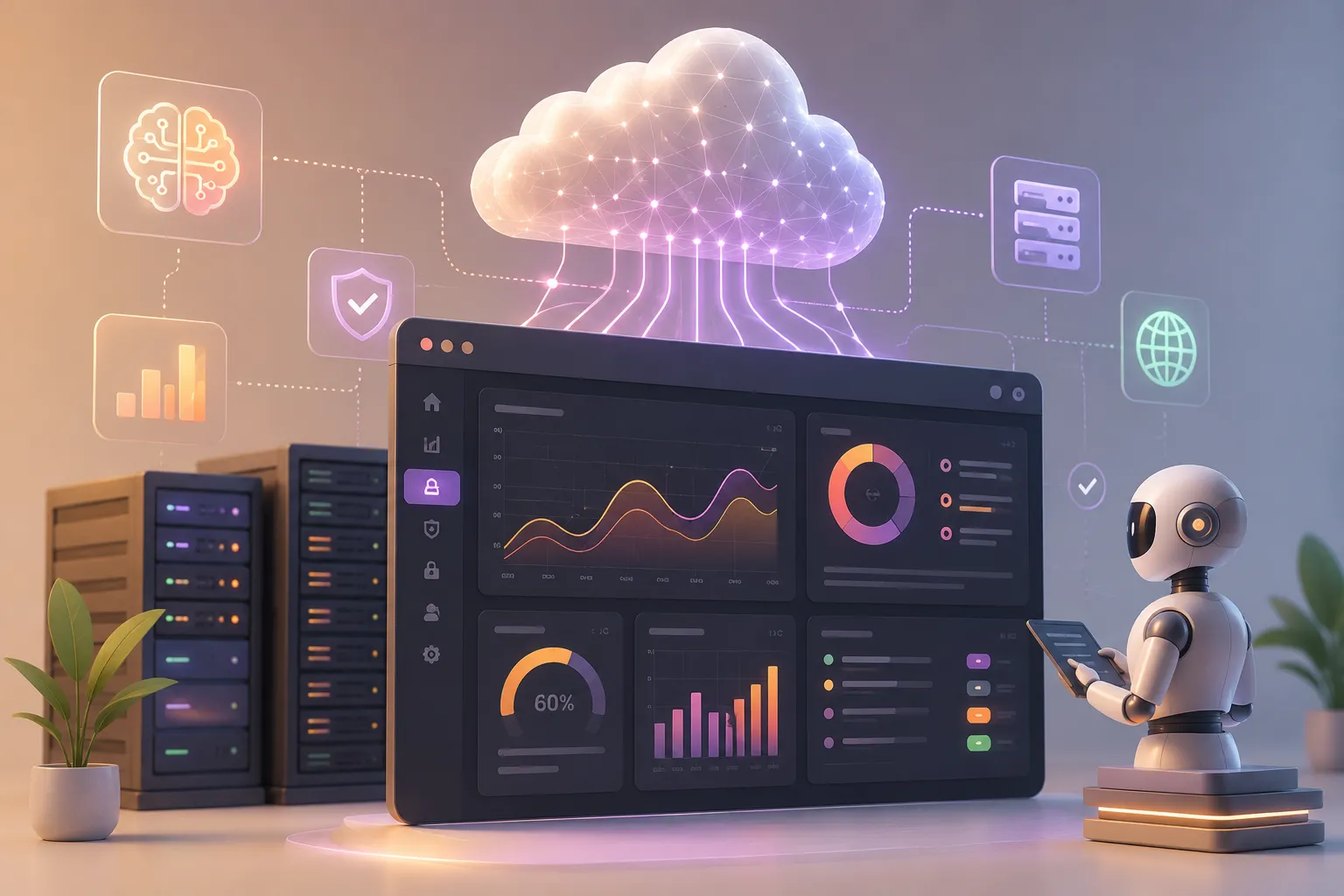
AI-Powered Cloud Management Portal

Cloud ecosystems generate enormous amounts of operational data every second. Virtual machines, applications, storage systems, networks, security layers, and cloud costs all produce continuous streams of information. Without intelligent analysis, critical insights can easily go unnoticed until performance issues or outages begin affecting the business.

An AI-powered Cloud Management Portal helps close this monitoring gap by consolidating data across the environment and continuously analysing it in real time. Instead of reacting to problems after the fact, businesses gain the ability to detect and address issues proactively.

Real-Time Visibility Across the Cloud Environment

One of the biggest advantages of a Cloud Management Portal is unified visibility. Rather than switching between multiple monitoring tools, teams can access infrastructure performance, resource health, configuration changes, security events, and usage analytics from a single platform.

AI continuously evaluates incoming data and identifies anomalies, performance degradation, unusual activity, or operational risks as they happen.

This real-time visibility allows organisations to:

  1. Monitor infrastructure health more effectively
  2. Detect potential failures earlier
  3. Improve operational response times
  4. Reduce service disruptions
  5. Make faster, data-driven decisions

A centralised Cloud Management Portal simplifies cloud operations while giving teams greater control over increasingly complex environments.

Automated Detection and Faster Incident Response

Many cloud infrastructure issues follow recognisable patterns. Resource spikes, abnormal application behaviour, misconfigurations, or suspicious access attempts often leave detectable signals before they become major incidents.

AI-powered monitoring tools within a Cloud Management Portal can identify these patterns instantly and trigger predefined automated responses. Routine remediation tasks can be executed automatically without waiting for manual intervention, significantly reducing downtime and operational delays.

Security-related anomalies can also be escalated immediately to the appropriate teams for investigation.

This level of automation delivers major operational benefits:

  1. Faster issue resolution
  2. Reduced manual workload
  3. Improved infrastructure stability
  4. Lower operational overhead
  5. Greater consistency in incident management

By automating repetitive monitoring and remediation tasks, technical teams can focus more on strategic initiatives rather than constant reactive support.

Cloud Cost Monitoring as Part of Infrastructure Health

Infrastructure health is no longer measured solely by uptime and performance. Cloud cost management has become equally important, especially as businesses scale their Azure environments.

An advanced Cloud Management Portal integrates FinOps capabilities directly into infrastructure monitoring, providing organisations with detailed visibility into cloud spending across resources, workloads, teams, and services.

AI-powered analytics help identify:

  1. Underutilized resources
  2. Unnecessary infrastructure costs
  3. Idle workloads
  4. Overspending trends
  5. Opportunities for optimization

This allows businesses to improve cloud efficiency without compromising performance or scalability.

For organisations managing large or multi-environment cloud infrastructures, this level of financial visibility is essential for maintaining long-term operational control.

Smarter Governance and Compliance Monitoring:

Governance and compliance requirements continue to become more demanding across industries. Maintaining secure and compliant cloud environments manually can be time-consuming and error-prone.

A Cloud Management Portal simplifies governance by continuously monitoring policy compliance, configuration standards, access controls, and security posture across the infrastructure.

AI-driven monitoring can quickly identify non-compliant configurations, unusual access behaviour, or policy violations before they create operational or security risks.

This proactive governance approach helps organisations strengthen cloud security while reducing compliance management complexity.

How SNP Technologies Delivers Intelligent Cloud Monitoring

At SNP Technologies, we have built our Cloud Management Portal to provide organisations with complete visibility, operational control, and intelligent automation across their Azure environments.

Our platform combines:

  1. Real-time infrastructure monitoring
  2. AI-powered alerting and anomaly detection
  3. Automated remediation workflows
  4. Integrated FinOps visibility
  5. Governance and compliance management
  6. Unified cloud service management

With more than 150 Microsoft certifications, 16 Microsoft specialisations, and over 1,000 successful project implementations, our team delivers enterprise-grade Azure expertise backed by intelligent cloud operations.

By integrating tools such as Azure Monitor and other advanced detection technologies, our Cloud Management Portal ensures businesses stay ahead of operational risks instead of reacting after issues occur.

Why Businesses Need an AI-Powered Cloud Management Portal

An AI-powered Cloud Management Portal is no longer a solution reserved for large enterprises. As cloud environments become more dynamic and business-critical, organisations of all sizes need smarter ways to manage infrastructure performance, security, governance, and cost optimisation.

Businesses that adopt intelligent cloud monitoring gain:

  1. Greater operational visibility
  2. Faster issue detection and resolution
  3. Improved cloud performance
  4. Better cost control
  5. Stronger security and governance
  6. Reduced pressure on technical teams

At SNP Technologies, we help organisations modernise cloud operations through intelligent monitoring, automation, and unified cloud management solutions.

If your business is ready to experience smarter cloud infrastructure monitoring, our team is ready to help you get started.

The Business Benefits of Working With a Microsoft CSP Partner

As businesses continue to expand their cloud infrastructure, choosing the right Microsoft Cloud Solution Provider has become a critical business decision. The right partner does far more than manage licences or process renewals — it helps organisations optimise costs, strengthen cloud operations, improve support, and maximise the long-term value of their Azure investment.

A trusted Microsoft Cloud Solution Provider becomes an extension of the business, providing strategic guidance, technical expertise, and operational support that enables organisations to scale with confidence.

Understanding the Role of a Microsoft Cloud Solution Provider

A Microsoft Cloud Solution Provider is a Microsoft-authorised partner responsible for managing cloud subscriptions, licensing, billing, and support services on behalf of customers. Instead of navigating Microsoft licensing complexities alone, businesses gain direct access to expert guidance tailored to their specific cloud environment.

Licensing structures can quickly become complicated, especially as businesses grow and adopt additional cloud services. Different subscription models, pricing tiers, and commitment plans require careful management to ensure organisations remain cost-efficient and compliant.

A reliable Cloud Solution Provider simplifies this process by helping businesses make informed decisions while continuously adapting cloud services to changing operational needs.

Flexible Licensing Designed Around Business Needs

Every organisation approaches cloud adoption differently. Some businesses are fully cloud-native, while others continue operating hybrid environments that combine on-premises infrastructure with Azure services.

The Business Benefits of Working With a Microsoft CSP Partner

An experienced Microsoft Cloud Solution Provider evaluates an organisation’s current infrastructure, long-term goals, operational requirements, and budget constraints before recommending the most suitable licensing model. This tailored approach ensures businesses only pay for the services they actually need while maintaining the flexibility to scale as requirements evolve.

Instead of rigid licensing structures, organisations gain cloud solutions that align closely with real business operations.

Better Visibility and Control Over Cloud Costs

One of the biggest challenges businesses face in the cloud is maintaining visibility into spending. As infrastructure scales and new resources are deployed, costs can gradually increase without a clear understanding of where the spend is coming from.

A Cloud Solution Provider helps organisations gain transparency into their Azure usage and cloud expenditure. With clearer reporting, ongoing optimisation, and proactive cost monitoring, businesses can better manage budgets and make more informed investment decisions.

This level of visibility also enables stronger financial planning and supports long-term cloud sustainability.

The Advantage of Working With a Partner Who Understands Your Environment

Technical support becomes far more effective when the provider already understands the organisation’s environment, architecture, and operational history. Businesses do not need to repeatedly explain infrastructure details or re-establish context every time an issue arises.

A knowledgeable Microsoft Cloud Solution Provider can resolve issues faster, minimise operational disruption, and provide more strategic recommendations around cloud architecture, governance, security, and scalability.

Beyond day-to-day support, the right partner contributes to long-term cloud planning — helping organisations modernise infrastructure, improve resilience, and align technology decisions with business growth objectives.

Why Businesses Choose SNP Technologies as Their Microsoft Cloud Solution Provider

At SNP Technologies, we operate as a Tier-1 Microsoft Cloud Solution Provider with an exclusive focus on Microsoft Azure. Our approach combines deep technical expertise with practical cloud management strategies designed to help organizations maximize performance, visibility, and cost efficiency.

Our team holds over 150 Microsoft certifications and 16 Microsoft specializations, with experience delivering more than 1,000 successful projects across multiple industries.

We provide:

  1. Expert Azure support services
  2. FinOps-driven cloud cost optimization
  3. Dedicated CSP Cloud Desk licensing guidance
  4. Centralized cloud management visibility
  5. Ongoing Azure environment optimization
  6. Strategic cloud planning and governance support

Our Cloud Management Platform gives organizations a unified view of their Azure environment, enabling better operational control and more informed decision-making across the cloud ecosystem.

Everything we do is focused on helping businesses achieve measurable, long-term value from their Azure investments.

Choosing the Right Cloud Solution Provider for Long-Term Success

The right Microsoft Cloud Solution Provider helps businesses simplify Azure management, improve operational efficiency, strengthen cost control, and create a more scalable cloud environment.

As cloud adoption continues to accelerate, organisations need more than a reseller — they need a strategic cloud partner capable of supporting growth, reducing complexity, and delivering ongoing optimisation.

At SNP Technologies, we combine Microsoft expertise, Azure-focused experience, and enterprise-grade cloud management capabilities to help businesses achieve exactly that.

If your organisation is looking for a more strategic and fully supported approach to Azure cloud management, our team is ready to help you move forward with confidence.

How AI and Automation Are Transforming Azure Managed Services

Cloud computing has fundamentally changed the way businesses operate, scale, and compete. As organisations increasingly rely on the cloud for mission-critical operations, the expectations around performance, security, and efficiency continue to grow. At the centre of this transformation, AI and automation are redefining how managed services on Microsoft Azure are delivered.

For every modern business, partnering with the right Microsoft Azure Managed Service Provider is no longer just about infrastructure support — it is about gaining intelligent, proactive, and highly optimised cloud operations.

The Shift Away from Manual Cloud Management

Not long ago, managing Azure environments required significant manual effort. IT teams spent hours monitoring dashboards, responding to alerts, diagnosing issues, and implementing fixes one task at a time. While this traditional approach worked, it was often reactive and inefficient. In many cases, by the time an issue was identified, business operations had already been affected.

Today, AI-powered Azure tools have dramatically changed this landscape. Solutions such as Azure Monitor and Microsoft Defender for Cloud continuously analyse massive volumes of operational data in real time. They can detect anomalies, predict potential failures, and identify security threats before they escalate into major incidents.

This evolution from reactive support to proactive cloud management is one of the most significant advancements in the managed services industry. A modern Azure Managed Service Provider now focuses on prevention, optimisation, and business continuity rather than simply responding to problems after they occur.

How Automation Is Improving Daily Cloud Operations

Many cloud management activities follow predictable, repetitive workflows — including resource scaling, patch management, system diagnostics, and routine maintenance. Automation has streamlined these processes, reducing manual intervention and significantly improving operational efficiency.

How AI and Automation Are Transforming Azure Managed Services

For example, Azure Autoscale automatically adjusts infrastructure capacity based on real-time demand. This ensures businesses maintain optimal performance during traffic spikes while avoiding unnecessary infrastructure costs during low-usage periods.

Automation also enables faster incident response. When predefined conditions are triggered, automated runbooks can immediately execute corrective actions without waiting for manual intervention. In many cases, issues are resolved before end users even notice them.

For any Azure Managed Service Provider, this capability translates into faster response times, reduced downtime, and more reliable cloud environments.

AI-Driven Cloud Cost Optimisation

Managing cloud costs remains one of the biggest challenges for organisations operating at scale. Cloud usage patterns constantly evolve, and without proper oversight, infrastructure spending can quickly become inefficient.

AI-powered tools such as Azure Cost Management help businesses gain deeper visibility into their cloud expenditure. These platforms analyse usage patterns, identify underutilised resources, recommend rightsizing opportunities, and suggest cost-saving plans based on real operational data.

A forward-thinking Azure Managed Service Provider uses these insights continuously rather than limiting optimisation efforts to quarterly reviews. This ongoing, data-driven approach helps businesses maintain better financial control while maximising the value of their Azure investments.

Smarter and More Adaptive Cloud Security

Cybersecurity threats continue to evolve, making traditional rule-based security approaches increasingly ineffective. Modern cloud security now depends heavily on AI and machine learning to identify unusual behaviour patterns and detect advanced threats in real time.

Microsoft Sentinel, Microsoft’s AI-powered SIEM solution, correlates signals from multiple sources across an Azure environment to detect suspicious activity more accurately. Instead of overwhelming security teams with false positives, it prioritises genuine threats that require immediate attention.

As a result, businesses working with an advanced Azure Managed Service Provider benefit from stronger, more adaptive protection that evolves alongside emerging cyber threats.

The Growing Convergence of AI and DevOps

AI is also reshaping DevOps practices within Azure ecosystems. Intelligent capabilities integrated into Azure DevOps and Application Insights help development teams identify build issues earlier, optimise deployment pipelines, and monitor application performance more effectively.

By leveraging AI-driven insights, engineering teams gain better visibility into application behaviour and infrastructure performance throughout the development lifecycle. This allows businesses to release updates faster, improve software stability, and reduce operational risks.

An Azure Managed Service Provider that integrates AI into DevOps workflows delivers far greater strategic value — enabling businesses to innovate faster while maintaining reliability and performance.

What Businesses Should Look for in an Azure Managed Service Provider

Not every Azure Managed Service Provider has fully adapted to the rapid advancements in AI and automation. Choosing a provider with proven expertise in intelligent cloud management can significantly impact long-term operational success.

Businesses should look for a partner that offers:

  1. AI-powered monitoring and predictive analytics
  2. Automated incident remediation
  3. Intelligent cost optimization strategies
  4. Advanced cloud security management
  5. Strong DevOps and automation capabilities
  6. Proven Microsoft Azure expertise and certifications

These capabilities are now essential for maintaining secure, scalable, and cost-efficient cloud environments.

Why Businesses Choose SNP Technologies?

At SNP Technologies, we combine deep Azure expertise with intelligent automation to help organizations achieve more from their cloud investments. With over 150 Microsoft certifications, 16 Microsoft specializations, and more than 1,000 successful project implementations across industries, our team delivers enterprise-grade Azure managed services tailored to evolving business needs.

From AI-powered monitoring and automated remediation to intelligent cost management and advanced security operations, we help businesses maintain stable, high-performing, and optimized Azure environments around the clock.

Partner with SNP Technologies for Smarter Azure Management

AI and automation are no longer future concepts in cloud management — they are the standard for modern managed services. Businesses that partner with an experienced Azure Managed Service Provider today are already benefiting from improved performance, stronger security, reduced operational overhead, and better cost efficiency.

At SNP Technologies, we help organisations unlock the full potential of Azure through intelligent, proactive, and scalable cloud management solutions.

If your business is ready to modernise its cloud operations, our team is ready to help.